
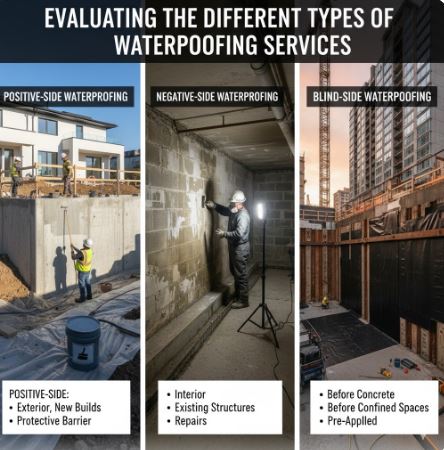
Water in enclosed areas such as basements or crawl spaces can weaken foundations and lead to biological growth and mildew. Waterproofing services help maintain the home’s structural integrity by keeping foundations and basements dry through various methods, tailored to the client’s specific needs. Here are the different types of waterproofing services:
Interior Drainage Systems
Interior drainage systems prevent water pooling under flows by redirecting the water in a basement to a sump pump. Waterproofing services install a perimeter drain along the basement wall to collect water, preventing it from seeping into the floors or walls. To reduce maintenance requirements, technicians add a filter fabric and gravel to the drainage system, which helps minimize clogging by filtering out debris.
Once sufficient water has filled up the pit stores in the sump pit, they are redirected outside the home. This process occurs automatically and involves pumping water through discharge piping, which may include a battery backup. A waterproofing service often inspects interior drainage systems by checking the sump pump, cleaning out debris, and clearing the drains. For older homes, waterproofing services typically involve making necessary floor or wall modifications before installing drainage systems.
Sump Pump Installation
Waterproofing services handle sump pump installation by assessing your home’s drainage needs and selecting an appropriate location, typically in a crawl space or at the basement’s lowest point. Technicians also check that the system operates efficiently and quietly, with mechanisms to manage water flow and prevent flooding. Routine checks are performed to monitor pump performance and water levels. Key steps in the installation process include:
- Selecting the optimal sump pump location based on drainage assessment
- Determining pump size and capacity to meet home requirements
- Installing a battery-powered backup pump for emergencies
- Securing and angling discharge pipes to prevent backflow
- Adding a check valve to minimize repeated cycling
- Testing the system to confirm proper operation and water level monitoring
Basement Encapsulation
Waterproofing services cover the basement floors and walls with a sealed barrier to protect the structure from humidity and biological growth. The barrier protects the masonry or concrete surfaces from water vapor. Waterproofing surfaces can use adhesives or mechanical fasteners that provide insulation support while protecting the walls from condensation. If the basement is susceptible to ground moisture, technicians will install a vapor-resistant mat supported by specialized tape or adhesive to prevent damp spots on the floor.
To reduce heat loss via the basement, services may include insulated walls, such as foam boards. It’s also possible to add a dehumidifier to the encapsulation system to keep the basement dry throughout the year. Integrating encapsulation with drainage systems prevents the occurrence of trapped moisture while increasing long-term dryness. Technicians conduct regular inspections to look for gaps or small tears that can compromise the effectiveness of the encapsulation.
Dehumidifier Installation
A dehumidifier in enclosed areas, such as crawl spaces or basements, prevents the development of musty or mildew smells. Waterproofing services will select the correct size dehumidifier after measuring the square footage of the enclosed space and determining the common moisture levels. They often place the dehumidifier in a central location, allowing air to circulate freely while reducing humidity. They decide how the dehumidifier will drain its water, whether it’s through a permanent host connection or through a flow drain. Some homeowners prefer an automatic humidity control system that automatically turns on and off to prevent over-drying.
Crawl Space Encapsulation
The area beneath the house is prone to moisture and biological growth, so technicians seal it to prevent these issues. They often use a thick polyethylene across the space floor and walls to prevent water from infiltrating through the walls. Technicians can also use caulk or foam to seal crawl space walls and prevent potential biological growth. Waterproofing solutions also incorporate insulation in the form of rigid or spray foam, which prevents condensation on cold surfaces.
Encapsulation may also include the installation of humidifiers to remove excess moisture from crawl spaces and improve air quality in these areas. Waterproofing services can integrate the encapsulation of crawl spaces with existing drainage systems to effectively remove water entering the space. Proper waterproofing in crawl spaces reduces gaps and creates an inhospitable environment for pests, such as rodents or insects.
Hire a Waterproofing Service
By encapsulating basements and crawl spaces, waterproofing solutions maintain dryness and help prevent frequent basement repairs. They also reduce the occurrence of moist environments that can attract pests such as insects and rodents. By preventing flooding and water accumulation, technicians help to protect the basement and the surrounding soil. Reach out to a waterproofing service that can help to protect your enclosed areas.
Also Read: Solar Generator – The Future of Clean, Reliable, and Portable Energy
[…] Travel Guide to Visit Vuzillfotsps: Best Time, Hidden Gems & Smart Travel Tips Evaluating the Different Types of Waterproofing Services Solar Generator – The Future of Clean, Reliable, and Portable Energy Solar Generators – […]
[…] Ultimate Travel Guide to Visit Vuzillfotsps: Best Time, Hidden Gems & Smart Travel Tips Evaluating the Different Types of Waterproofing Services Solar Generator – The Future of Clean, Reliable, and Portable Energy Solar Generators – […]