
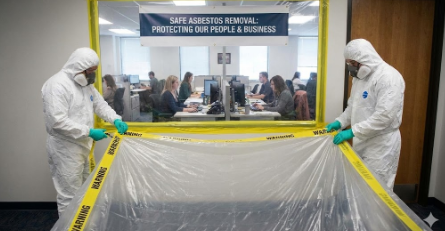
For many businesses, asbestos isn’t something that comes up in daily conversations. It often sits quietly behind walls, above ceilings, or within old building materials—out of sight and out of mind. But when asbestos is disturbed during renovations, maintenance, or demolition, it can quickly become a serious workplace issue.
Safe asbestos removal plays a critical role in protecting employees and keeping business operations running smoothly. It’s not just about meeting regulations—it’s about safeguarding people, productivity, and long-term business stability.
Why Asbestos Is a Workplace Risk, Not Just a Building Issue
Asbestos was widely used in commercial buildings for decades because of its durability and fire resistance. Many offices, factories, warehouses, and retail spaces still contain asbestos materials today.
The risk arises when these materials are damaged or disturbed. Tiny fibres can be released into the air, where they may be inhaled without anyone noticing.
Understanding how asbestos behaves helps explain why businesses must treat it seriously. Exposure doesn’t usually cause immediate symptoms, which makes the risk easy to underestimate—but the long-term health impact can be significant.
Protecting Employees Means Protecting the Business
Employees are a business’s most valuable asset.
When staff feel unsafe or uncertain about their working environment, morale and productivity suffer. Concerns about airborne hazards can lead to absenteeism, complaints, or even work stoppages.
In manufacturing and logistics, safety protocols are in place to reduce injury risk and maintain efficiency. Safe asbestos removal follows the same principle—remove hazards before they affect people.
A healthy workplace supports stronger performance across the board.
Preventing Operational Disruption
Unexpected asbestos discoveries can disrupt business operations.
Renovations may halt. Areas may need to be closed. Staff may need to be relocated temporarily. Without proper handling, these disruptions can last longer than necessary.
In construction project management, early risk identification prevents costly delays. Safe asbestos removal allows businesses to plan work carefully, isolate affected areas, and continue operating where possible.
Controlled processes reduce downtime and uncertainty.
Why Improper Handling Creates Bigger Problems
Trying to manage asbestos without professional support can make matters worse.
Incorrectly handling asbestos materials can spread fibres throughout ventilation systems, equipment, and shared spaces. What starts as a contained issue can become a building-wide concern.
In food processing, contamination in one area can shut down an entire facility. Asbestos behaves similarly—once fibres spread, cleanup becomes far more complex and expensive.
Safe removal limits exposure and prevents escalation.
Supporting Compliance and Reducing Liability
Businesses have legal responsibilities to provide safe working environments.
Failing to manage asbestos properly can lead to regulatory penalties, insurance issues, or legal claims. Even the perception of unsafe conditions can damage a company’s reputation.
In finance and corporate governance, compliance protects organisations from long-term risk. Safe asbestos removal supports compliance while demonstrating a commitment to employee wellbeing.
Responsible action builds trust with staff, clients, and regulators.
Maintaining Business Continuity During Renovations
Renovations are common in growing businesses.
Whether expanding office space or upgrading facilities, older buildings often reveal asbestos during refurbishment. Safe removal ensures renovations can continue without endangering people.
In healthcare facilities, renovations are carefully staged to avoid disrupting operations. Safe asbestos removal applies similar planning and control.
Business growth doesn’t need to come at the expense of safety.
Clear Communication Builds Employee Confidence
One often overlooked benefit of safe asbestos removal is communication.
When employees understand that risks are being managed professionally, anxiety decreases. Transparency reassures staff that their health is a priority.
In aviation, clear safety communication builds passenger confidence even during delays. Businesses benefit from the same openness when managing workplace risks.
Trust supports engagement and retention.
When Safe Asbestos Removal Becomes Essential
Safe asbestos removal is especially important when:
- Renovating or upgrading commercial spaces
- Operating in older buildings
- Managing shared or high-traffic workplaces
- Planning demolition or structural changes
In these situations, many organisations choose safe asbestos removal for businesses to ensure risks are handled professionally and efficiently.
Expert handling enables businesses to focus on operations rather than on hazards.
Protecting Equipment, Inventory, and Infrastructure
Asbestos fibres don’t just affect people—they can contaminate equipment and products.
In warehouses or manufacturing facilities, airborne fibres may settle on machinery, stock, or packaging. This can result in costly cleaning or disposal.
In pharmaceutical production, contamination control is essential to maintain quality standards. Safe asbestos removal follows similar containment principles.
Protecting infrastructure protects investment.
Long-Term Benefits Beyond Immediate Safety
Safe asbestos removal offers benefits that extend well beyond the initial project.
It reduces the likelihood of future disruptions, supports safer renovations down the line, and improves property usability. Businesses gain clarity about what’s behind their walls—and peace of mind moving forward.
In asset management, proactive maintenance prevents costly failures. Asbestos removal fits squarely into that proactive approach.
Prevention is always more efficient than reaction.
Why Professional Processes Matter
Safe asbestos removal isn’t just about removing materials—it’s about how the work is done.
Controlled zones, protective equipment, proper disposal, and post-removal checks all play a role. These steps ensure the space is safe to re-enter and use.
In engineering, strict procedures exist because shortcuts lead to failure. Asbestos management demands the same discipline.
Professional processes protect everyone involved.
Final Thoughts: Safety Supports Sustainable Business
Safe asbestos removal protects employees, preserves operations, and reduces long-term business risk.
It allows companies to operate confidently, renovate responsibly, and demonstrate genuine care for workplace health. More than a compliance task, it’s an investment in people and continuity.
When asbestos is managed safely, businesses can focus on what matters most—serving customers, supporting teams, and growing without unnecessary risk.
Also Read: How Custom Curtains & Blinds Transform Comfort, Privacy, and Style
[…] Getting Support for Company Formation Sets Your Business Up for Success How Safe Asbestos Removal Protects Employees and Business Operations How Custom Curtains & Blinds Transform Comfort, Privacy, and Style Urlwo: The Smart Link […]