
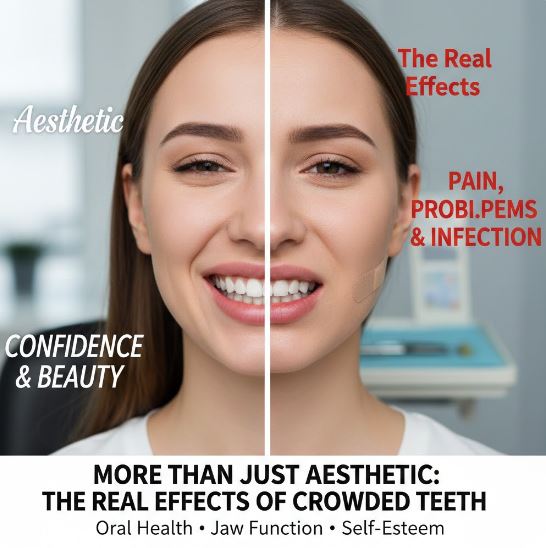
When most people think of crowded teeth, they imagine a cosmetic issue—a smile that looks uneven or misaligned. And while appearance is often the first thing we notice, the effects of crowded teeth go far beyond aesthetics. Dental crowding can impact your oral health, confidence, and daily comfort in ways that might surprise you. Understanding these effects is the first step to addressing the problem and protecting your long-term dental wellbeing.
What Exactly Are Crowded Teeth?
Crowded teeth occur when there isn’t enough space in the jaw to accommodate all the teeth properly. Instead of lining up neatly, teeth twist, overlap, or shift toward each other. Some people develop mild crowding, while others experience severe misalignment that affects both upper and lower arches. Genetics plays a major role, but habits like thumb sucking, early loss of baby teeth, and jaw growth issues can also contribute.
Crowding often becomes more noticeable as permanent teeth come in, especially during adolescence. However, teeth can continue shifting into adulthood—meaning even someone with a previously straight smile may experience crowding later in life.
Health Risks You Can’t See in the Mirror
Beyond how they look, crowded teeth can create a range of oral health problems. Here’s how:
1. Hard-to-Reach Plaque and Tartar Buildup
When teeth overlap or sit too close together, brushing and flossing become more challenging. Food particles and plaque collect in tight spaces, making it easy for bacteria to thrive. Over time, this leads to tartar buildup that can’t be removed by regular brushing alone.
2. Increased Risk of Cavities
Because crowded teeth create small, hidden areas where brushing is less effective, cavities are more likely to form. You might not notice a problem until discomfort sets in or a dentist points it out during an exam. The longer decay goes untreated, the more tooth structure is compromised.
3. Gum Inflammation and Disease
Crowded teeth can irritate the gums, causing them to become red, swollen, or tender. When bacteria builds up along the gumline, gingivitis may develop. If left untreated, this can progress into periodontal disease—a serious condition that can eventually lead to tooth loss.
4. Excessive Wear on Tooth Surfaces
Misaligned teeth often make contact in the wrong places while chewing. This uneven pressure can cause enamel to wear down more quickly. Over time, worn enamel increases sensitivity, discoloration, and the risk of cracks or chips.
5. Jaw Pain and Bite Issues
Crowded teeth can influence how the upper and lower jaws align. A bite that feels “off” can cause tension in the jaw joints, leading to discomfort, clenching, grinding, or even headaches. In more serious cases, chronic jaw pain or TMJ disorders may develop.
6. Speech Difficulties
Pronunciation of certain sounds relies on proper tooth placement. When teeth overlap significantly, speech may be affected, particularly in children who are still developing oral motor skills.
Beyond Health: Effects on Confidence and Quality of Life
Although health concerns are often the most critical, the emotional impact of crowded teeth shouldn’t be overlooked. Many people feel self-conscious about their smile, avoiding photos, holding back laughter, or covering their mouth when talking. This can affect social interactions, work confidence, and overall happiness.
A confident smile is powerful—and correcting dental crowding can boost self-esteem in remarkable ways.
Treatment Options for Crowded Teeth
The good news is that there are effective ways to address crowded teeth at nearly any age. Treatment options include:
- Braces – Traditional braces gradually shift teeth into proper alignment.
- Clear Aligners – A discreet solution ideal for teens and adults.
- Tooth Extraction – In some cases, removing a tooth makes space for healthy alignment.
- Palatal Expanders – Often used in children to widen the jaw and prevent future crowding.
- Retainers – Help maintain alignment after orthodontic treatment.
If crowding is caused by lack of space due to impacted third molars, dental professionals may recommend wisdom teeth removal in Richmond Indiana as part of a long-term treatment plan.
Final Thoughts
Crowded teeth are more than a visual concern—they can influence oral health in meaningful ways. Cavities, gum disease, enamel wear, and even jaw pain can stem from lack of space in the mouth. Fortunately, with modern orthodontic options and early intervention, treating crowded teeth is easier and more accessible than ever.
If you or your child is experiencing crowded teeth, don’t wait for problems to grow. Consult with a dental professional, explore treatment solutions, and take the first step toward a healthier, brighter smile. Your teeth—and your confidence—will thank you.
Also Read: Top 10 Toothpastes for Kids: Safe, Fun, and Effective
[…] Guide to Buying Jewelry He’ll Wear Forever More Than Just Aesthetic: The Real Effects of Crowded Teeth Top 10 Toothpastes for Kids: Safe, Fun, and Effective Eco-Friendly Snow Management Solutions […]
[…] Way to Fix Cracked or Worn-Out Floors A Guide to Buying Jewelry He’ll Wear Forever More Than Just Aesthetic: The Real Effects of Crowded Teeth Top 10 Toothpastes for Kids: Safe, Fun, and Effective Eco-Friendly Snow Management Solutions […]