
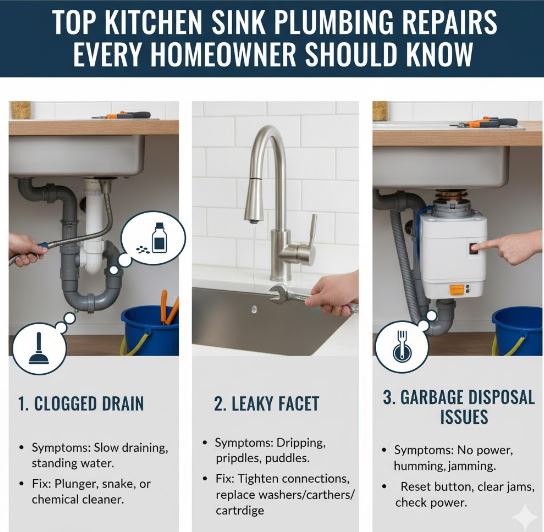
Of all household fixtures, the kitchen sink probably gets some of the heaviest use in any home. From washing dishes to preparing meals and cleaning produce, this sink handles a load of everyday activity. With such heavy usage, it shouldn’t be surprising that, over time, problems will start to pop up with the plumbing of a kitchen sink. While many of the common repairs necessitate professional help, quite a good number of them can be handled by you yourself with basic tools and just a little knowledge. Knowledge of these will not only save your money but also help you in preventing small problems from turning into big, costly plumbing catastrophes.
The following are the most common kitchen sink plumbing repairs that every homeowner should know, plus some very easy-to-follow tips and preventive measures.
1. How to Unclog a Kitchen Sink
Probably the most common problem encountered by homeowners is a clogged drain. As time goes by, it becomes slower and slower due to the grease, soap scum, and food particles building up inside pipes and obstructing or completely hindering the flowing water.
How to Fix It:
- Boiling Water Method:
Just pouring boiling water down the drain can easily loosen buildups of grease. Better effectiveness is possible if done in stages.
- Baking soda and vinegar:
Mix ½ cup of baking soda with ½ cup of vinegar. Pour it into the drain and let it fizz for 15 minutes. Flush it with hot water.
- Plunger:
Use a cup plunger to create suction to hopefully force the clog loose. Fill the sink with enough water to cover the plunger base.
- P-Trap Cleaning:
If the clog persists, place a bucket underneath the P-trap and loosen the slip nuts to clean the trap manually.
Prevention Tips:
- Avoid pouring grease and food scraps down the drain.
- Use a drain strainer.
- Periodic running of hot water through them will remove any blockage in the pipes.
2. Fixing Leaking Faucets
This not only wastes water and increases utility bills but may become annoying eventually. These are most often caused by worn-out washers, O-rings, or cartridge parts.
How to Fix It:
- Shut off the water supply underneath the sink.
- Use a screwdriver to disassemble the handle from the faucet.
- Replace old and worn-out washers or cartridges.
- Reassemble the faucet and check for leaks.
When to call an expert:
Depending on faucet corrosion, mineral buildup, or outdated hardware, a full replacement by a plumber may be needed.
3. Garbage Disposal Clearance or Replacement
Garbage disposals are convenient, but they tend to jam or clog up with fibrous foods, bones, grease, and foreign objects.
Common Signs of Garbage Disposal Problems:
- No grinding, just a humming noise
- Water is backing up into the sink.
- Poor drainage
- Leaking from the bottom or sides
How to Fix It:
- Reset Button:
Press the bottom reset button. This will often solve the problem of electrical overload.
- Manual Reset by Hex Key:
Place the included hex wrench into the underside of the disposal and rotate to free jammed blades.
- Check for Blockages:
Always unplug the unit or turn off the breaker before reaching inside with tongs – never with your hands.
Replacement
If it is an old, rusted or leaking unit, it may be cheaper to replace the disposal.
4. How to fix the low water pressure in your kitchen sink.
Low water pressure can turn every simple task into frustration. Mineral deposits inside of the aerator or buildup in supply lines are two of the most common causes of low water pressure.
How to Fix It:
- Remove the aerator from the end of the faucet.
- Otherwise, one can soak or rinse with vinegar to get the mineral buildups out.
- Check the supply valves under the sink to ensure they are fully open.
- Check supply lines for leaks.
Pro Tip:
If this occurs only with the hot water, then the problem may well be with your water heater and not the kitchen plumbing.
5. Repairing a Leaking P-Trap
The P-trap is the curved part of the pipe underneath the sink. Leaks in this area of the plumbing are most frequently caused by loose nuts, worn-out washers, or corrosion.
How to Fix It:
- Put a bowl under the trap to collect the water.
- Slip nuts must be checked and tightened.
- If leakage continues, take out the trap and look for fractures.
- Replace either washers or the whole trap-whichever is called for.
Most P-traps are rather inexpensive and can be replaced using basic tools.
6. Clearing Clogged Drains due to Grease and Food
Build-up Even if the sink isn’t completely clogged, slow drainage is proof of partial blockages.
DIY Fix:
- Apply enzymatic drain cleaners; they don’t harm pipes.
- Once a week, flush with hot water.
- Never use hard chemical cleaners; they will ruin the plumbing eventually.
7. Unclog a Clogged Spray Nozzle
As time goes by, your sink’s pull-out sprayer can either quit because of the hose or due to problems with mineral buildup.
How to Fix It:
- Take out the sprayer head and soak it in vinegar.
- Check the hose for any kinks or blockages in it.
- Replace the hose if it shows signs of wear and tear or leakage.
8. Fixing Bad Odors Coming from the Sink
Most of the bad smells arise from trapped food, mold, or bacteria within the drain or garbage disposal.
How to Fix It:
- Flush with a baking soda and vinegar mixture.
- Run citrus peels through the disposal.
- Clean the rubber splash guard flaps.
- Check the P-trap for problems with stagnant water.
Lingering odors may mean further buildup of the pipes, hence requiring professional cleaning.
9. Loose Sink Mounts and Hardware
Repair Over time, the constant use can loosen sink clips, faucet mounts, or drain assemblies.
How to Fix It:
- Under the sink, tighten the mounting brackets.
- Using the plumber’s putty, re-seal the drain flange.
- Re-secure the faucet nuts by using a basin wrench.
The stable sink means fewer leaks and better performance.
10. Replacing Worn-Out Supply
With time, the hot- and cold-water supply lines may become brittle, get damaged, and start to leak.
How to Fix It:
- Switch off the main water supply.
- Using pliers, remove old hoses.
- Replace with braided stainless steel lines for durability.
- Make all the connections snug to avoid any leakage.
Conclusion
Kitchen sink plumbing is a typical problem that most homeowners face; however, most of them can be resolved by using basic tools and simple steps. From unclogging the drain to fixing the faucet leak and tightening loose parts, knowing how such repairs are done helps in having smoothly running kitchens and hence avoiding costly emergencies. Regular maintenance and proper use of your drain; timely repair will keep your sink running great for years to come. Knowing the top kitchen sink plumbing repairs each homeowner should master helps you confidently take care of minor problems and when to call in the pros. A little knowledge will save you time, money, and stress, and make every day in your kitchen more reliable and pleasant.
Also Read: Evaluating the Different Types of Waterproofing Services
[…] Junkies – Geeksoutfit Cherrykitten’s Cutest Y2K Baby Tee Designs for Aesthetic Lovers Top Kitchen Sink Plumbing Repairs Every Homeowner Should Know Unlocking Creativity with Face Swap, Face Swap AI, and AI Clothes Changer Ultimate Travel […]